Should You Get a Boiler Inspection Before Buying a House?
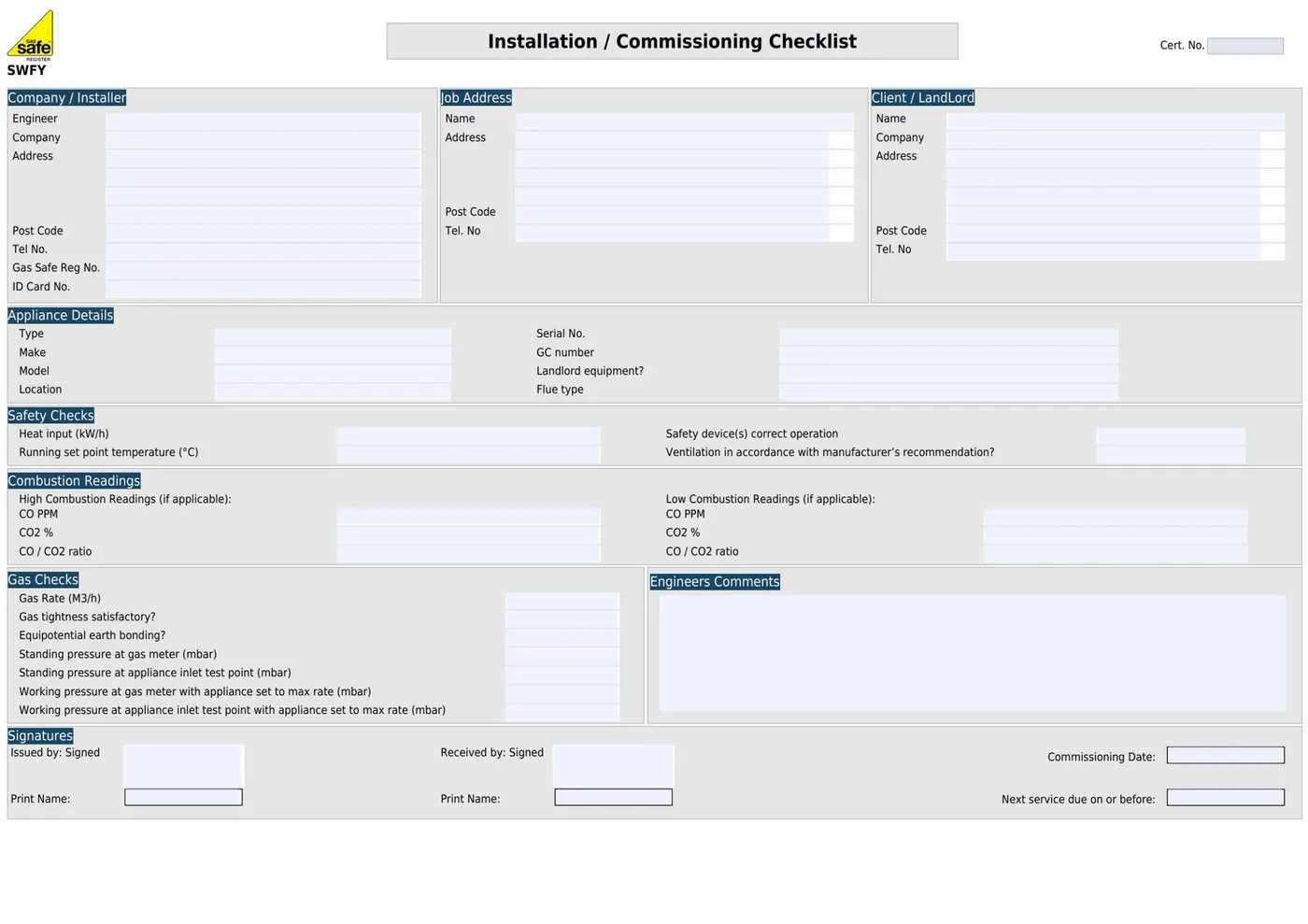
A building survey will note the boiler but will not test it. Before you exchange, a Gas Safe engineer can tell you whether the boiler is safe, how it has been looked after and what the paperwork shows. Here is when that is worth doing.
Yes, a boiler inspection before buying a house is often worth it, particularly if the boiler is more than about ten years old, there is no service history, or the survey has flagged the heating. A standard home survey does not test the boiler. Surveyors look at what is visible and normally recommend that a Gas Safe registered engineer checks the gas installation. An inspection before exchange tells you whether the boiler is safe, whether it has been maintained, and whether the paperwork you would expect is in place, while you can still negotiate.
Why the Home Survey Is Not Enough
Surveyors are not gas engineers and do not test gas appliances. At most they will note the boiler's age, obvious defects and the position of the flue, and advise a specialist check.
That leaves several things unknown: whether the boiler burns gas safely, whether the flue is sound and correctly sited, whether the system holds pressure, and whether the controls work. Some of these can hide expensive problems. A boiler that runs on the day of a viewing can still be close to failing, and a flue that has been boxed in during a kitchen refit can be impossible to inspect without opening it up.
What a Pre-Purchase Boiler Inspection Can Check
An engineer can check that the boiler operates safely, test the gas pipework, look at the flue and ventilation, and check the controls and system pressure. How far they go depends on what the seller allows.
A typical pre-purchase visit looks at:
- Safe operation. Whether the boiler lights, runs and shuts down properly, and whether a flue gas analysis shows it burning gas correctly.
- The gas pipework. A tightness test to confirm there are no leaks on the installation.
- The flue. Its route, its condition where visible, and whether its position meets the rules for distance from windows, doors and boundaries.
- Visible condition. Signs of leaks, corrosion, scorching or water marks around the casing.
- The heating system. Pressure, radiators heating properly, and whether the controls and thermostats work.
- Hot water storage. If there is an unvented cylinder, whether it has its safety devices and paperwork. An unvented cylinder should also have its own yearly service record.
Remember that you are not the owner yet. The engineer needs the seller's permission to visit and will not dismantle the boiler without it. If the seller agrees to a full service, you get a much more thorough picture, including the state of the heat exchanger and burner.
What an Inspection Cannot Tell You
No engineer can tell you exactly how many years a boiler has left. An inspection tells you its condition and safety today, not a date when it will fail.
What it can do is give you the facts to judge that risk yourself: the boiler's age, whether parts are still made for it, whether it has been serviced, and whether anything is already wearing out. A 15-year-old boiler that has been serviced every year and passes every check is a different prospect from an 8-year-old boiler with no history and a leaking valve. Neither is a guarantee.
Paperwork to Ask the Seller For
Ask for the boiler's service history, the installation certificate and the manufacturer's warranty details. The seller's property information form also asks about the heating, including when it was installed and serviced.
- Service records. Ideally one for each year. A gap does not mean the boiler is faulty, but it does mean you know less about it. Our article on how to read a boiler service record shows what a proper record contains.
- The Building Regulations Compliance Certificate. Gas boiler installations in England must be notified, and the owner receives a certificate confirming it. Your solicitor may ask for it.
- The Benchmark checklist. Usually in the back of the boiler manual, completed by the installer and updated at each service.
- Warranty details. Some manufacturer warranties can pass to a new owner, but many depend on an unbroken yearly service record. Ask whether the warranty was registered and whether it transfers.
- Landlord records. If the property was let, the landlord gas safety records show whether the installation was checked each year.
If you are on the other side of the sale, our guide to boiler service history when selling covers what buyers and conveyancers usually ask for.
When an Inspection Is Worth Paying For
It is most worth it when the boiler is older, has no service history, sits in an awkward position, or the survey has already raised concerns. It matters less on a recently installed boiler with a full set of records.
London flats bring their own questions. A boiler on an internal wall with a long flue running through a ceiling void, a flue that discharges into a lightwell or onto a walkway, or a boiler in a cupboard that has been made smaller during a refurbishment all deserve a closer look. In a flat with communal heating, there may be no boiler of your own to inspect, and the questions are for the managing agent instead: who maintains the plant, how the costs are shared and when it was last serviced.
What to Do With the Results
Use the report to ask questions or renegotiate before you exchange, not after. If the engineer finds an unsafe appliance, they will explain the classification and tell the owner what action is needed.
A report that shows a boiler near the end of its life, or a flue that does not meet current rules, is a fair basis for asking the seller to reduce the price, carry out the work or give a credit. Minor points such as low system pressure or a sticking thermostat are normal for a lived-in home and rarely worth a dispute. Once you own the property, book the first annual boiler service promptly so your own service history starts from a known point.
If you are buying in London and would like the boiler checked before exchange, send us the address, the boiler make and model if you know them, and whether the seller has agreed to a visit. We will tell you what an inspection can cover in that property before anything is booked.
Frequently asked questions
Does a home buyer's survey check the boiler?
Not in any depth. Surveyors are not gas engineers and do not test gas appliances. They usually note the boiler's age and any visible defects and recommend a check by a Gas Safe registered engineer before you commit to buying.
Can I get a boiler inspected before I own the house?
Yes, with the seller's permission. The engineer can check safe operation, the gas pipework, the flue and the controls. They will not open up or dismantle the boiler without the owner's agreement, so a full service before exchange depends on the seller.
What boiler paperwork should a buyer ask for?
Ask for the service history, the Building Regulations Compliance Certificate from installation, the completed Benchmark checklist and the manufacturer's warranty details. If the property was let, ask for the landlord gas safety records as well.