Care Home Gas Safety: Certificates, Boiler Servicing and Who Is Responsible
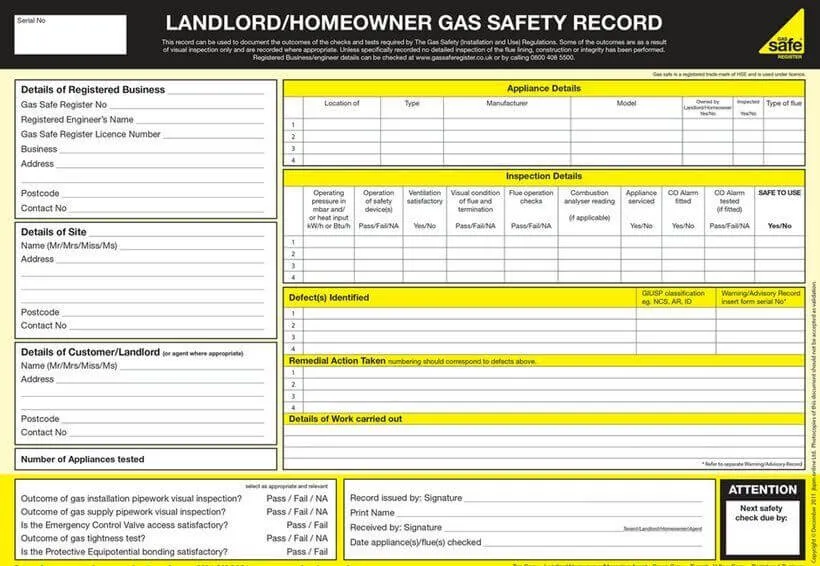
A care home needs every gas appliance, pipe and flue kept safe by law, which in practice means an annual gas safety inspection and boiler service by a suitably qualified Gas Safe registered engineer. Here is which records apply, who is responsible and how to plan servicing around residents.
A care home needs its gas appliances, pipework and flues inspected and maintained so they are safe, which in practice means an annual gas safety inspection and an annual boiler service by a Gas Safe registered engineer qualified for the appliances on site. The law does not issue a care home with a single certificate. It places a duty on the provider to keep the gas installation safe, and the written inspection and service records are how you show that duty is met, to your insurer and to the Care Quality Commission when it looks at the safety of your premises. Because residents are often frail and may not recognise the signs of a gas or carbon monoxide problem, the standard you work to should be higher than the minimum.
What the Law Requires
Under the Gas Safety (Installation and Use) Regulations 1998, an employer or anyone in control of premises must make sure the gas appliances, pipework and flues they control are maintained in a safe condition. A care home provider falls squarely under that duty.
Care homes regulated by the Care Quality Commission also have to meet its requirement that premises and equipment are safe and properly maintained. The inspector will not usually test your boilers, but they can ask to see evidence that someone competent has. That evidence is your gas safety record, your service records and a record of any remedial work, all in date and easy to find.
If residents live in their own flats under a tenancy, as in some supported living and extra care schemes, the landlord gas safety rules may apply to those flats as well: an annual check of each gas appliance the landlord provides and a copy of the record given to the resident. Check how your residents occupy the building before deciding which rules apply.
Which Gas Safety Records Apply
A care home usually has more than one gas installation, and each has its own record. The heating plant and the kitchen are normally inspected and recorded separately.
- Boilers and heating plant. A larger home with a plant room is treated as a non-domestic installation, and the result is recorded on a commercial gas safety record, often called a CP17. A small home in a converted house may have domestic-sized boilers, but the engineer still needs to be qualified for the premises and the appliances.
- The kitchen. Gas catering equipment is inspected against the catering standards and recorded on a catering gas safety record, often called a CP42. That inspection includes the interlock between the gas supply and the extraction.
- Other appliances. Gas fires, tumble dryers in the laundry and any other gas appliances need to be included, so list them when you book.
- Residents' flats. Where the landlord rules apply, each flat's appliances go on a Landlord Gas Safety Record.
Before anyone works on site, ask to see the engineer's Gas Safe ID card and check that the categories on the back cover the work they are doing. Our commercial gas safety certificate page explains the CP17 and CP42 inspections in more detail.
Boiler Servicing in a Care Home
A safety inspection confirms the installation was safe on the day. A service is what keeps the boilers working, so both are needed, at least once a year and in line with the manufacturer's instructions.
Heating and hot water in a care home often run all year, and losing them is more serious than in most buildings because residents feel the cold quickly and depend on hot water for personal care. Many homes book the main service in late summer, so worn parts are replaced before the heating season, and add a second visit part-way through the year where the plant works hard. If the home has more than one boiler, they can be serviced one at a time so heating and hot water are never lost together. Our commercial boiler servicing page covers what a visit includes.
Hot Water Safety
Hot water in a care home has two risks that pull in opposite directions: water stored too cool can grow legionella bacteria, and water delivered too hot can scald residents. The boiler and hot water plant have to be set up to manage both.
HSE guidance for care settings is to store and circulate hot water hot enough to control legionella, and to fit thermostatic mixing valves where residents could be scalded, so water at baths, showers and basins is delivered at a safe temperature. Those valves need regular checking and servicing of their own. If the home has an unvented hot water cylinder, it also needs an annual inspection by an engineer qualified for unvented systems; our unvented cylinder servicing page explains that check. Your legionella risk assessment should say who does what and how often, and your servicing records should match it.
Carbon Monoxide Precautions
Residents may not recognise headaches, drowsiness or confusion as carbon monoxide symptoms, and staff may put them down to illness. That makes carbon monoxide detection and good maintenance more important in a care home than almost anywhere else.
Your fire and gas risk assessments should decide where carbon monoxide alarms are fitted, and as a sensible minimum that means rooms with a gas appliance and the rooms around a boiler house or kitchen. Test alarms regularly and replace them at the end of their life. Staff should know that a yellow or orange flame, soot marks, a pilot that keeps going out or a boiler that locks out repeatedly are reasons to call an engineer. If anyone smells gas, turn off the supply at the emergency control valve if it is safe to do so, open windows, move people away from the area and call the National Gas Emergency Service on 0800 111 999.
Planning Visits Around Residents
A gas inspection and service in a care home needs more planning than in an office, because the building is never empty and residents should not lose heat or hot water unexpectedly. A clear plan agreed in advance keeps the visit short and safe.
- Send the engineer a list of every gas appliance and where it is, including laundry and kitchen equipment.
- Agree times that avoid mealtimes for the kitchen and morning personal care for the hot water.
- Arrange temporary heating if a single-boiler home will be without heat for part of the visit.
- Tell staff which areas will be affected and when, and name one person the engineer reports to.
- Keep every record together and diary the next due date, so nothing depends on memory.
For a multi-appliance site, one visit covering the inspection and service is usually the most efficient approach. Send us your appliance list and the date of your last records and we will come back with a quote and a plan for the visit before anything is booked.
Frequently asked questions
Does a care home need a gas safety certificate?
The law requires a care home provider to keep its gas appliances, pipework and flues in a safe condition rather than to hold one named certificate. In practice that means an annual inspection by a suitably qualified Gas Safe registered engineer, recorded on a commercial or catering gas safety record, plus regular servicing.
How often should a care home boiler be serviced?
At least once a year, following the manufacturer's instructions. Because heating and hot water often run all year in a care home, many providers add a second visit part-way through the year and service multiple boilers one at a time so residents are not left without heat or hot water.
Do care homes need carbon monoxide alarms?
Your fire and gas risk assessments should decide, and fitting alarms in rooms with gas appliances and near boiler rooms and kitchens is sensible practice. Residents may not recognise the symptoms of carbon monoxide, which makes detection especially important.