Do You Need a Gas Safety Certificate If You Only Have a Gas Hob?
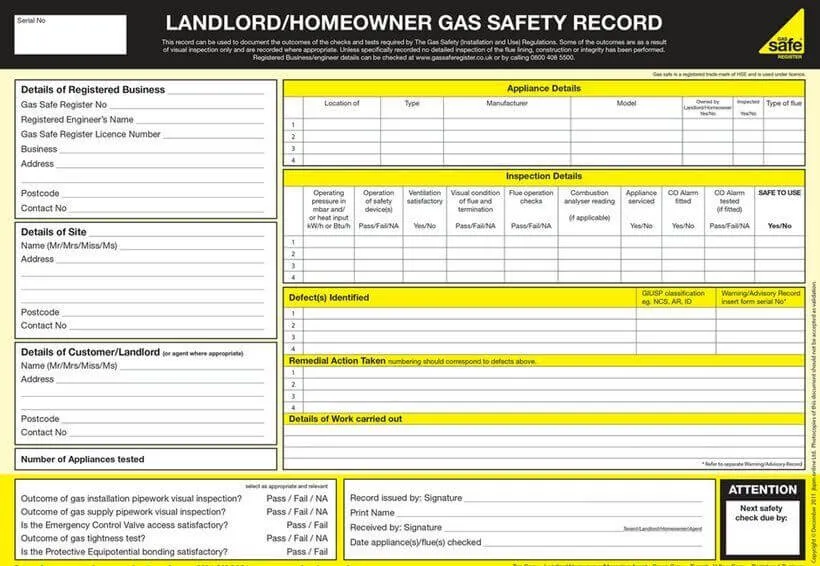
Yes. A landlord who provides a gas hob or cooker needs an annual gas safety check and a certificate for it, even when the heating and hot water are electric. Here is why, what the engineer checks, and the few cases where no certificate is needed.
Yes. If you let out a property with a gas hob or gas cooker that you provide, you need an annual landlord gas safety check and a certificate (the CP12 record) for it, even if the heating and hot water are electric and there is no gas boiler at all. The legal duty covers every gas appliance and flue a landlord provides for tenants, not just boilers. This catches out a lot of London landlords, because flats in converted houses and older blocks often have electric storage heaters and a gas hob in the kitchen.
Why a Hob Is Covered by the Rules
The Gas Safety (Installation and Use) Regulations 1998 require landlords to have every gas appliance and flue they provide checked by a Gas Safe registered engineer every 12 months. A hob is a gas appliance, so it is covered in exactly the same way as a boiler.
There is no minimum size and no exemption for appliances that are rarely used. A hob burns gas in the room where your tenant cooks and eats, and it can leak or burn badly like any other appliance. The same paperwork rules apply too:
- The check must be done at least every 12 months.
- Existing tenants must get a copy of the record within 28 days of the check.
- New tenants must get a copy before they move in.
- You must keep each record for at least two years.
You can have the next check done up to two months before the current one runs out and still keep the original renewal date, so there is no reason to cut it fine. Our guide to what happens during a gas safety certificate inspection covers the full visit when there are several appliances.
What the Engineer Checks on a Gas Hob or Cooker
On a hob-only property, the engineer checks the hob, the pipework feeding it and the room it sits in, then records the result. It is a shorter visit than a property with a boiler, but it is not a glance and a signature.
- Gas tightness. Most engineers test the installation for leaks, which covers the pipework from the meter to the hob as well as the hob itself.
- Burners and flame picture. Each burner is lit and the flames checked. Flames should be steady and mostly blue. Lazy, yellow or lifting flames point to a problem with the burner, the gas supply or the air around it.
- Ignition and safety devices. The ignition is checked, and where the hob has a flame supervision device, the engineer tests that it shuts off the gas if a flame goes out. Many newer hobs have one on every burner; some older ones don't.
- The connection. On a freestanding cooker with a flexible hose, the hose and its bayonet fitting are checked for damage, kinks and correct length.
- Stability. A freestanding cooker should have a stability bracket or chain so it can't tip forward if someone leans on an open oven door. A missing bracket is a common finding.
- Ventilation. The engineer checks the room has the ventilation the appliance needs. Kitchens that have been refitted, or had a window replaced with one that doesn't open, sometimes fall short.
If it is a full gas cooker rather than a hob, the oven and grill are checked as well. Each gas appliance is listed separately on the record with its own result.
Tenant-Owned Cookers and Other Grey Areas
The duty only covers appliances you provide. If a tenant brings their own gas cooker, the annual check of that cooker is not your responsibility, but the pipework and gas supply feeding it still are.
In practice this is where arguments start, so write it down. Note in the tenancy agreement or inventory which gas appliances belong to you. If the tenant owns the cooker, the engineer can still look at it during your visit and record whether it appeared safe, which protects everyone. If they find it dangerous, they will deal with it under the same safety procedure as any other appliance, whoever owns it.
Two other situations come up often in London:
- Communal boilers. If the flat's heating comes from a boiler in a shared plant room, the building owner or managing agent is usually responsible for that boiler. You are still responsible for the gas hob in your flat.
- A gas fire you forgot about. An old gas fire that is still connected counts even if the tenant never uses it. Either include it in the check or have it properly disconnected.
If You Remove the Hob or Cap the Gas
If there are no gas appliances left in the property, there is nothing for the annual appliance check to cover. Swapping a gas hob for an induction or ceramic one is the usual way landlords end up here.
Two things to get right if you go down this route. First, disconnecting and capping the gas supply is gas work, so it must be done by a Gas Safe registered engineer, not by the kitchen fitter. Second, ask the engineer to confirm in writing what has been disconnected and capped, and where. Any gas pipework you leave in place still has to be kept safe, and if the meter stays live, it is worth having the installation checked rather than assuming it is inert.
Removing a gas hob just to avoid one check a year rarely makes financial sense on its own. It makes sense when the kitchen is being refitted anyway, or when the hob is old and would need replacing soon.
What It Costs and How to Book It
A hob-only property sits at the simplest end of the range, because there is one appliance to test and record. The price is mostly the engineer's time and travel, plus how easy it is to reach the meter and the hob.
When you ask for a quote, say clearly that the property has a gas hob and no gas boiler, give the postcode, and mention anything that affects access, such as a meter in a locked communal cupboard. Our breakdown of what a landlord gas safety certificate costs in London explains how the number of appliances changes the price.
If you own several flats in the same building, booking them on the same day usually keeps things simple for you and the tenants. Our landlord gas safety certificate service covers hob-only flats as well as properties with boilers and fires, and you get a written record for each property. To arrange a check, send us the address and a list of the gas appliances.
Frequently asked questions
Do I need a gas safety certificate if I only have a gas cooker?
Yes, if you are a landlord and you provide the cooker. Any gas appliance a landlord provides must be checked every 12 months by a Gas Safe registered engineer, and a copy of the record given to tenants. It does not matter that there is no gas boiler.
Who is responsible if the tenant owns the gas cooker?
The tenant is responsible for the safety check of an appliance they own. As the landlord you are still responsible for the gas pipework and supply that feed it. Record in the tenancy paperwork which appliances belong to you, and ask your engineer to note the tenant's cooker on the visit.
Do I need a gas safety certificate if the gas supply is capped?
If there are no gas appliances left in the property, there is nothing for the annual appliance check to cover. Make sure the capping was done by a Gas Safe registered engineer and get written confirmation of what was disconnected, and keep any remaining gas pipework in safe condition.