My Landlord's Gas Safety Certificate Has Expired: What Can I Do?
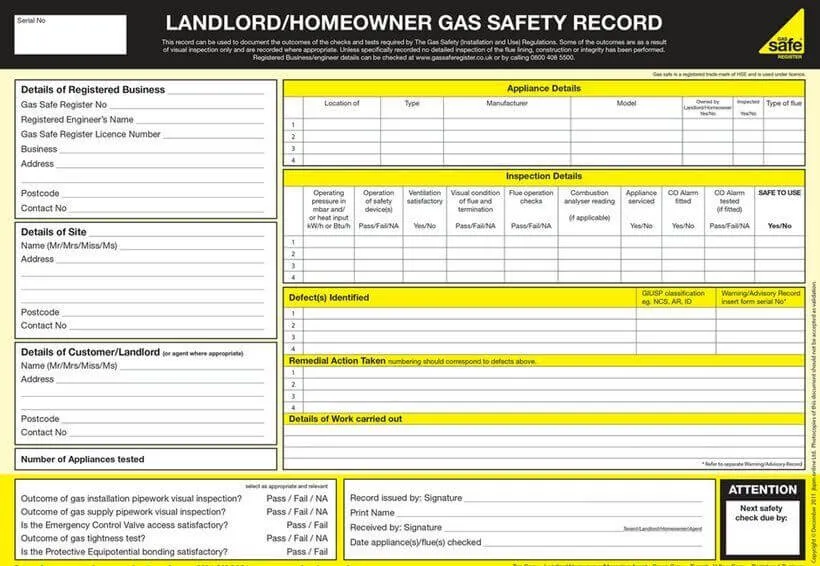
If your landlord's gas safety certificate has expired, ask them in writing to book a new check, keep a record, and report it to the Health and Safety Executive if nothing happens. If you smell gas or a carbon monoxide alarm sounds, treat it as an emergency first.
If your landlord's gas safety certificate has expired, the first step is to tell your landlord or letting agent in writing and ask them to book a new gas safety check. It is the landlord's legal duty to have every gas appliance they provide checked every 12 months by a Gas Safe registered engineer and to give you a copy of the record. If they do nothing, you can report it to the Health and Safety Executive, which enforces landlord gas safety. And if you ever smell gas or a carbon monoxide alarm goes off, deal with that as an emergency before anything else.
If you are the landlord rather than the tenant, see what happens when a landlord has no valid gas safety certificate.
Is It an Emergency?
An expired certificate on its own is a paperwork and legal problem, not proof that anything is unsafe. It becomes an emergency if you smell gas, a carbon monoxide alarm sounds, or people in the home get headaches, dizziness or nausea that ease when they go outside.
In any of those cases, turn the appliance off if it is safe to do so, open windows, get everyone out and call the National Gas Emergency Service on 0800 111 999. Do not use the appliance again until a Gas Safe registered engineer has checked it. Our guide to carbon monoxide warning signs from a boiler covers what to look out for.
How to Check Whether It Has Really Expired
Look at the date on the last record you were given: a landlord gas safety record is valid for 12 months from the date of the check. If you were never given one at all, that is a problem in itself.
Landlords must give existing tenants a copy within 28 days of each annual check, and new tenants a copy before they move in. It is worth knowing that a new check can be done up to two months before the old one runs out while keeping the original renewal date, so a record dated slightly early is normal. If the date on your copy is more than 12 months ago, ask for the current one before assuming the worst; the landlord may have had the check done and not passed it on.
Raise It in Writing
Send your landlord or letting agent a short, polite message by email or letter asking for a copy of the current gas safety record, or for a check to be booked if there is none. Writing matters because it gives you a dated record of when you raised it.
Keep it factual: the date on the last record you have, the fact that it has passed 12 months, and a request for a new check and a copy of the certificate. If a managing agent runs the property, send it to them and copy in the landlord if you have their details. Responsibility for the check can be passed to an agent in the management contract, but the duty itself does not disappear; our article on managing agent versus landlord responsibility explains how that split works.
Let the Engineer In
Once a check is booked, give reasonable access so it can go ahead. A landlord who is trying to get the check done and cannot get in is in a different position from one who has not tried.
The inspection covers every gas appliance and flue the landlord provides: usually the boiler, and any gas hob, gas fire or water heater. If an appliance fails, the engineer may turn it off until it is repaired, which is the system working as it should. The engineer checks that each appliance burns safely, that flues carry fumes out of the home, that there is enough ventilation, and that safety devices work. You do not need to do anything technical; just make sure the appliances, the flue and the gas meter can be reached.
If Your Landlord Does Nothing
If you have asked in writing and nothing has happened, you can report it to the Health and Safety Executive (HSE), which enforces the gas safety duties landlords have. Your local council's private housing or environmental health team can also advise on the condition of rented homes.
Keep copies of your messages and any replies, and note the dates of any calls. A clear timeline of when you raised the problem and what you were told is the most useful thing you can bring to anyone advising you. For advice on your wider position as a tenant, including how gas safety paperwork can affect notices a landlord serves, Shelter and Citizens Advice are the right first call. The rules on tenancies and eviction notices in England have been changing, so check current advice rather than relying on what a friend was told a few years ago.
Should You Book Your Own Gas Safety Check?
Usually not. The legal duty sits with the landlord, and a check you arrange yourself does not put that right or produce the landlord's record for the property.
There is one exception worth knowing about: gas appliances you own yourself, such as a cooker you brought with you, are your responsibility rather than the landlord's. If you are worried about safety in the meantime, a working carbon monoxide alarm near any gas appliance is a sensible step, and you can always ask for the appliance to be checked sooner. If you are a landlord reading this from the other side, see what to do if your gas safety certificate has lapsed, or book a landlord gas safety certificate in London.
Frequently asked questions
What should I do if my landlord's gas safety certificate has expired?
Ask your landlord or letting agent in writing for a copy of the current record, or for a new check to be booked if there isn't one. Give access when the engineer is booked. If nothing happens, you can report it to the Health and Safety Executive. If you smell gas or a carbon monoxide alarm sounds, call 0800 111 999 first.
Can I refuse to let the gas engineer in?
You should give reasonable access for the annual check, at a time agreed with you. The check is there to protect the people living in the property, and a landlord needs access to meet their legal duty.
Is my landlord responsible for my own gas cooker?
No. The landlord's duty covers the gas appliances and flues they provide. An appliance you own and brought with you is your responsibility, although the landlord remains responsible for the pipework supplying it.