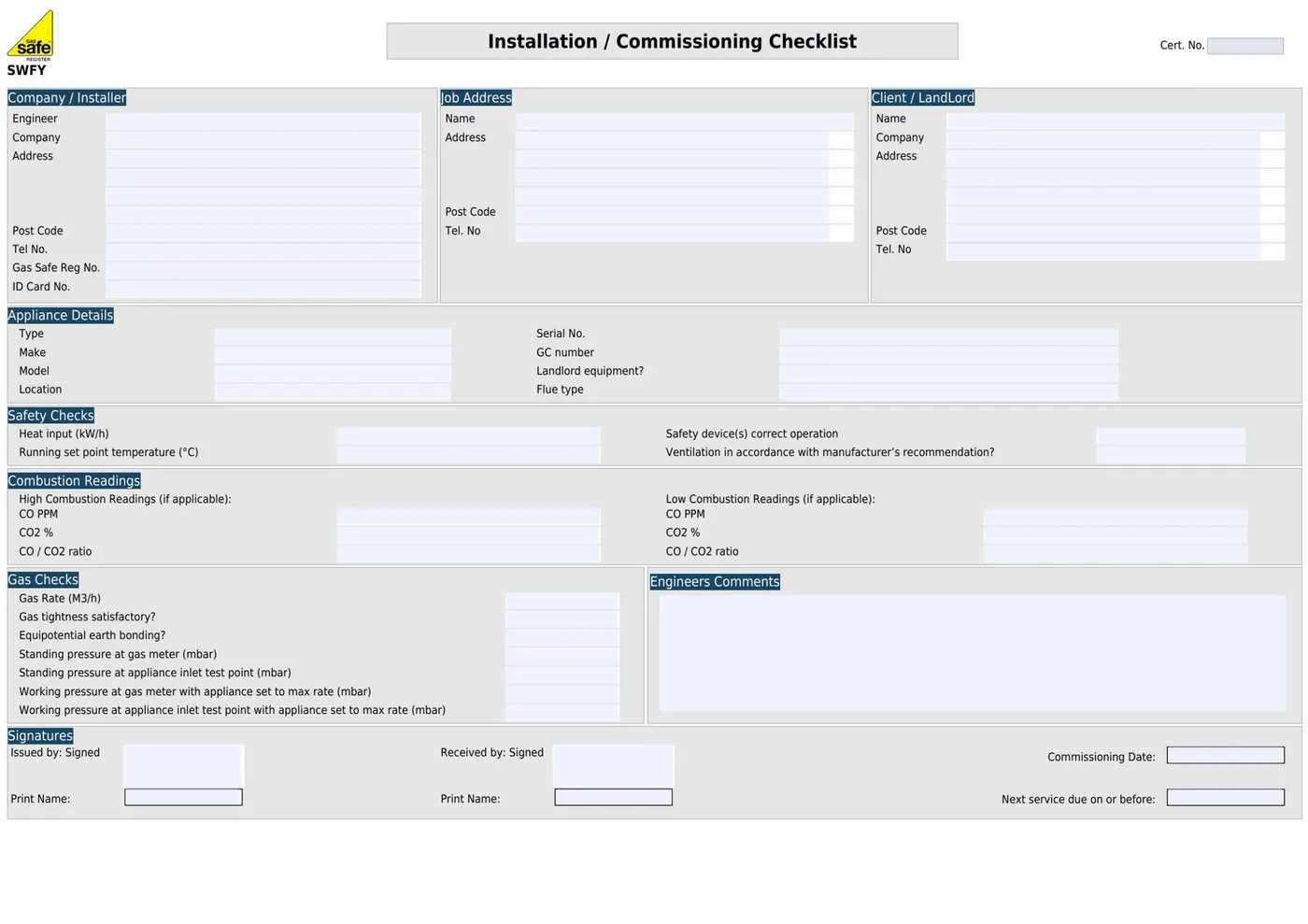
A combi boiler service covers the usual gas safety, combustion and flue checks plus the parts that make hot water on demand. Here is the full checklist, what is not included and how to prepare.
A combi boiler service includes all the safety checks any gas boiler gets, plus checks on the parts that make hot water on demand: the hot water heat exchanger, the diverter valve, the expansion vessel and the pressure relief valve. The engineer confirms the boiler burns gas safely, clears its waste gases properly and shuts down when it should, then runs both the heating and a hot tap to check each side works as it should. It does not include radiators, repairs or a system flush.
The checks every gas boiler gets, whatever its type, are set out in our guide to what a boiler service should include; this page covers what is different on a combi.
The Safety Checks Every Combi Service Includes
The heart of a combi service is the same as on any gas boiler: the gas side, the combustion and the flue. These checks are what make the visit a safety inspection rather than a quick look.
- A gas tightness test on the installation pipework to confirm there are no leaks.
- Burner, main heat exchanger and electrodes inspected and cleaned where the manufacturer's instructions say so.
- Combustion analysis with a flue gas analyser, compared with the manufacturer's figures for the model.
- Gas pressure and gas rate checked so the boiler is getting and burning the right amount of gas.
- The flue checked along its route for secure joints, damage and anything blocking the terminal.
- Safety devices such as flame supervision and overheat protection tested.
If the engineer skips the combustion analysis or never takes the case off, the full service has not been done.
The Checks That Are Specific to a Combi
Because a combi heats tap water directly from the mains, a good service also checks the parts that switch between heating and hot water and keep the sealed system at the right pressure.
- Diverter valve. This sends heat either to the radiators or to the hot water side. The engineer runs a hot tap with the heating on to check it switches cleanly and returns afterwards.
- Hot water heat exchanger. Many combis use a separate plate heat exchanger for tap water. In hard water areas like most of London it can scale up, which shows as hot water that struggles to get hot or swings between hot and cold. The engineer checks hot water temperature and flow at a tap.
- Expansion vessel. This absorbs the water's expansion as it heats. If its charge has dropped, the pressure gauge climbs when the heating is on and falls when it cools. Our guide to expansion vessels explains how the charge is checked.
- Pressure relief valve and system pressure. The engineer confirms the system sits at the right cold pressure and that the relief valve and its discharge pipe are sound.
- Condensate trap and pipe. Every modern combi is a condensing boiler. A blocked trap, or an outside pipe that freezes, is one of the most common reasons for a winter lockout, so the trap is cleaned and the pipe route checked.
Some combis also have a small filter on the cold mains inlet, and many systems have a magnetic filter on the heating return. Where these are fitted, the engineer should check and clean them as part of the visit.
What a Combi Boiler Service Does Not Include
A service does not cover repairs, new parts, radiators or cleaning the heating system itself. It is a check and clean of the boiler on a working system.
If the engineer finds a part that needs replacing, such as a failing diverter valve or a heat exchanger that has scaled badly, that becomes a repair and is quoted separately. Cold radiators, sludge in the system and noisy pipes are heating system problems rather than boiler service items. Our article on what a boiler service does not cover lists the usual gaps so there are no surprises on the day.
How a Combi Service Differs From a System or Regular Boiler
A combi service is usually simpler than a system or regular boiler service because there is no hot water cylinder, and on a regular boiler no loft tanks, to check as well.
On the other hand, the combi carries more of the load inside one box, so the hot water side gets more attention than it would on a boiler that only heats a cylinder. If you are not sure which type you have, or you want to see how the three compare, our guide to servicing differences between boiler types covers it.
How to Prepare for a Combi Boiler Service
Clear space around the boiler, make sure a hot tap and the heating controls can be reached, and have your last service record ready. That lets the engineer spend the visit on the boiler rather than on access.
Combis are often fitted in kitchen cupboards, so take out anything stored around or under the boiler, including anything resting on the condensate pipe. Tell the engineer about anything you have noticed since the last service, such as the pressure gauge creeping down, hot water that takes longer to arrive, or new noises. These are clues that help them look in the right place, and it is better to mention them than to wait for them to become a breakdown.
Signs Your Combi Needs More Than a Service
If the boiler has stopped producing hot water, keeps losing pressure, shows a fault code, or you can smell gas, a service is the wrong visit. Book a repair, or in the case of a gas smell, call the gas emergency line straight away on 0800 111 999.
A service is designed to keep a working boiler safe and efficient and to catch small problems early. It is not a diagnosis visit for a boiler that has already failed. When the combi is working normally, though, a yearly service is the cheapest way to keep it that way, and most manufacturers need an unbroken annual record to keep the warranty valid. When you are ready, book an annual boiler service and tell us the make and model when you do.
Frequently asked questions
Is a combi boiler service different from a normal boiler service?
The safety checks are the same. A combi service adds checks on the hot water side, including the diverter valve, the hot water heat exchanger, the expansion vessel and the pressure relief valve, because a combi heats tap water directly.
How often should a combi boiler be serviced?
Once a year. Most manufacturers need an unbroken annual service record to keep the warranty valid, and a yearly check catches problems such as a low expansion vessel charge or a blocked condensate trap before they cause a breakdown.
Does a combi boiler service include descaling?
Not as standard. The engineer checks hot water temperature and flow, and if the hot water heat exchanger has scaled up enough to affect performance, cleaning or replacing it is quoted as separate work.