Boiler Service Plans for Landlords: Are They Worth It?
A service plan can make running a let property easier, but it does not carry your legal duties for you. Here is what a landlord plan needs to include, what it usually leaves out, and when paying per visit is the better choice.
A boiler service plan can be worth it for a landlord, but only if it covers the things the law makes you responsible for and fits how your property is let. The plan is a contract between you and a company. It does not move the legal duties for gas safety, maintenance and repairs away from you, and plenty of plans sold to homeowners leave out the one thing a landlord cannot do without: the annual gas safety check. Read the terms with your legal duties in front of you and the choice becomes much clearer.
What the Law Asks of a Landlord, Whether or Not You Have a Plan
You must have every gas appliance and flue you provide checked every 12 months, keep them maintained in a safe condition, and repair the heating and hot water within a reasonable time. A plan can help you meet those duties, but you remain the person responsible.
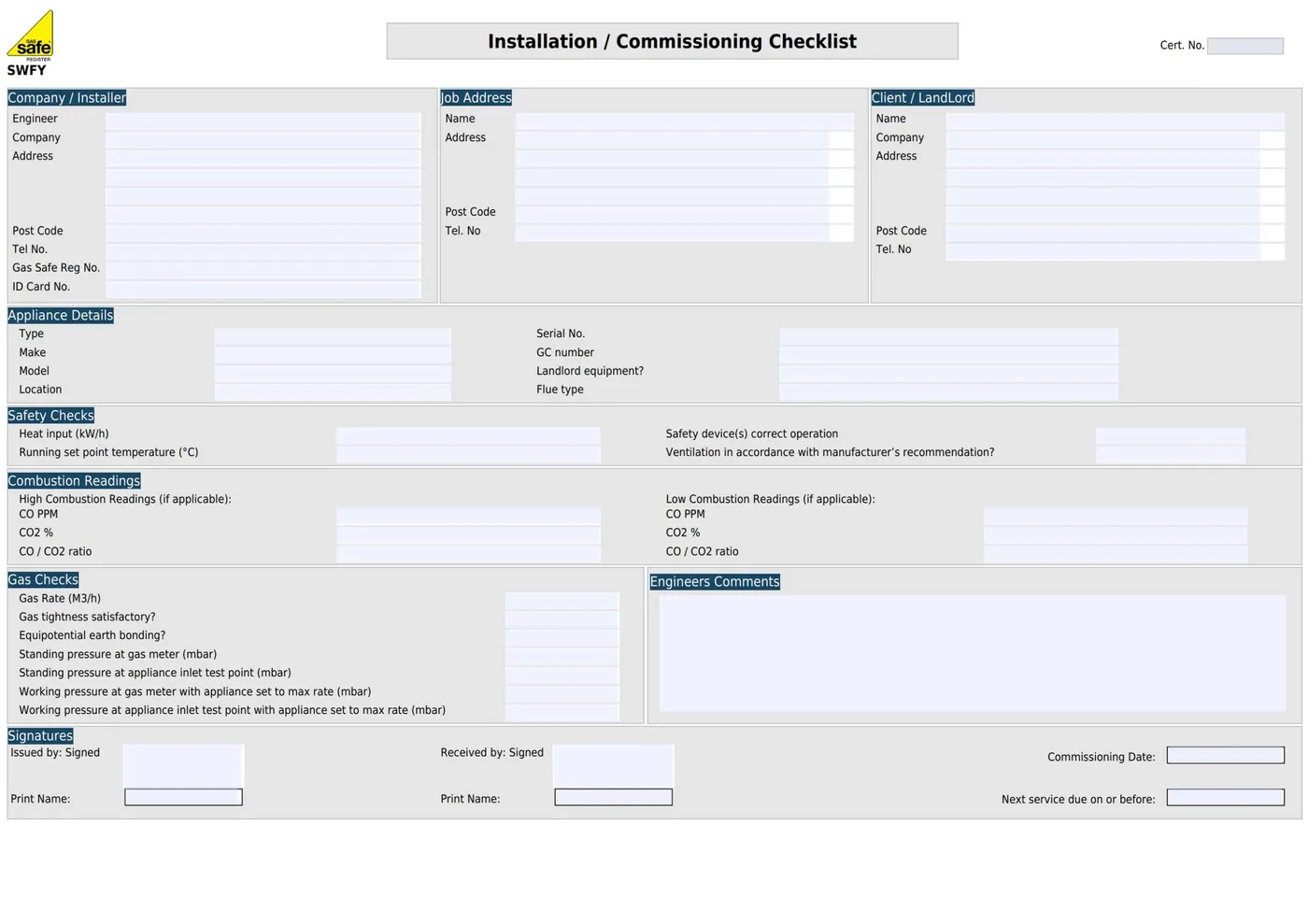
In practice that means three separate jobs. The first is the annual gas safety check, which produces the Landlord Gas Safety Record (often called the CP12). A copy goes to existing tenants within 28 days of the check and to new tenants before they move in, and you keep records for at least two years. The second is maintenance, which for most boilers means a yearly service in line with the manufacturer's instructions. The third is repair: the Landlord and Tenant Act 1985 makes you responsible for keeping the installations for heating and hot water in repair and proper working order. Our article on landlord boiler responsibilities goes through each duty in more detail.
If a boiler breaks down in January and the plan provider cannot attend for several days, the tenant's complaint is still with you. That is the point to keep in mind when you compare plans.
Does a Boiler Service Plan Include the Gas Safety Certificate?
Often it does not. Many plans include an annual boiler service but not the Landlord Gas Safety Record, and some offer it only as a paid add-on.
The difference matters because a service and a gas safety check are separate jobs. A service looks inside the boiler and keeps it working properly. The safety check covers every gas appliance and flue you provide, including a gas hob, cooker or fire, and produces the record you are legally required to hold. A plan that services the boiler but leaves out the hob does not cover your whole legal obligation. Ask the provider directly whether the plan includes the landlord gas safety check, whether it covers every gas appliance in the property, and whether the record is issued on the same visit as the service. Our Landlord Gas Safety Certificate page explains what the check itself involves.
What a Good Landlord Plan Should Cover
A plan that suits a let property includes the annual service and the gas safety check on one visit, covers breakdowns on the boiler and the heating controls, and lets you manage tenant access without chasing the provider.
Check the terms for each of these points:
- The annual service and the safety check together, so both records carry the same date and the tenant only gives access once.
- Every gas appliance you provide, not only the boiler.
- Breakdown repairs, with a clear statement of what is included: parts, labour and call-outs, and any limit on the number of claims or the value of a repair.
- How appointments are arranged. Some providers contact the tenant directly. Others will only deal with you. Either can work, but you need to know which.
- Where records are sent. You need the service record and the safety record, ideally by email, so you can pass the safety record to the tenant within 28 days.
- Multiple properties. If you let more than one home, ask whether each property needs its own plan and whether renewal dates can be lined up.
Our boiler service plan comparison guide sets out the general questions to ask about any plan, landlord or not.
What Landlord Plans Usually Leave Out
Most plans exclude faults that existed before the plan started, damage caused by sludge in the system, and boilers above a certain age or in poor condition. These exclusions are where landlords are most often caught out.
Look closely at the following:
- Pre-existing faults. A fault present when the plan begins is usually excluded, and some plans have an initial period in which you cannot claim at all.
- Sludge and system condition. Blocked heat exchangers and failed pumps caused by debris in the system are commonly excluded, and the provider may ask for a power flush before cover resumes.
- Age limits. Older boilers may be refused, or covered only for the service and not for repairs, or covered with a cap on parts that are no longer made.
- Damage by occupants. Tampering, frost damage in an empty property and accidental damage are often outside the cover.
- Speed of attendance. Read what the plan actually says about when an engineer will come. A vague promise helps nobody when a tenant has no hot water.
When a Plan Is the Wrong Answer
A plan is often poor value on a new boiler still under the manufacturer's warranty, and it may not help at all on a boiler close to the end of its life. In both cases, paying for the service and the safety check as one visit each year may suit you better.
A new boiler with a long manufacturer's warranty is already covered for most parts failures, provided it is serviced every year. Paying again for breakdown cover duplicates much of that. At the other end, an old boiler that a plan provider will only cover with exclusions and caps can leave you paying a monthly fee for little protection. If a boiler is unreliable and hard to get parts for, that is a decision about replacement, not about cover.
A plan also does not suit every landlord's way of working. If you already have a trusted engineer who carries out your annual visits and responds to repairs, a plan adds a second party without adding much. If you let one property in London and live some distance away, a plan with a clear process for tenant access and repairs can take a real burden off you.
Plan or Pay Per Visit: How to Decide
Work out what you actually need each year, then compare it with what the plan covers and what you would pay separately. The right answer depends on the boiler's age, how many properties you let, and how you want repairs handled.
Ask yourself these questions:
- How old is the boiler, and is it still under the manufacturer's warranty?
- Do you need the gas safety check on the same visit as the service, and does the plan include it?
- How many gas appliances do you provide besides the boiler?
- Who will arrange access with the tenant, and how quickly can repairs happen?
- If you let several properties, would one provider for all of them make records easier to keep?
Whichever route you take, keep the service records and the safety records together for each property. They are your evidence that you met your duties if anything is ever questioned.
If you would like help working out what your let property needs, send us the details: the boiler make and age, the other gas appliances and whether the tenant is in place. We will tell you plainly whether a plan or a yearly service and safety check visit suits you better.
Frequently asked questions
Does a boiler service plan cover a landlord's legal duties?
No plan transfers the legal duties. The landlord remains responsible for the annual gas safety check, for keeping gas appliances maintained and for repairing the heating and hot water. A plan is a way of getting that work done, so check it covers each part.
Do boiler service plans include the landlord gas safety certificate?
Not always. Many plans include only the boiler service, and some offer the Landlord Gas Safety Record as an extra. Ask whether the plan includes the safety check, whether it covers every gas appliance you provide and whether the record is issued on the same visit.
Is a service plan worth it on a new boiler in a rental property?
Often not. A new boiler usually has a manufacturer's warranty that covers most parts failures, as long as it is serviced every year. Paying for the annual service and gas safety check as one visit may cost less than a plan that duplicates the warranty.