What Should a Commercial Boiler Maintenance Contract Include?
A commercial boiler maintenance contract should list every item of plant, set the planned visits and what each includes, say whether gas safety inspections are covered, and spell out breakdown terms, records and how it ends. Here is what to check before you sign.
A commercial boiler maintenance contract should state exactly which plant is covered, how many planned visits there are each year and what each one includes, whether the annual gas safety inspection is part of it, how breakdowns are handled and charged, what records you get, and how the contract ends. If any of those are vague, you are buying a promise rather than a schedule. This guide is for businesses, managing agents and building owners with non-domestic or plant-room boilers. If you want cover for a single boiler at home, a domestic service plan is the thing to compare instead.
What a Maintenance Contract Is, and What It Is Not
A maintenance contract, often called planned preventive maintenance or PPM, is an agreement for a set number of scheduled visits to your heating plant each year, usually with terms for fault call-outs in between. It is not insurance, and it does not make the contractor responsible for your legal duties.
Under the Gas Safety (Installation and Use) Regulations 1998, whoever controls a workplace must keep the gas appliances, pipework and flues there in a safe condition. A contract is how most sites organise that work, but the duty stays with the business or building owner. That is why the detail matters: if the contract leaves something out, nobody is booked to do it.
Most contracts fall somewhere between two models:
- Planned visits only. Servicing and inspections on fixed dates, with any repairs quoted and charged separately.
- Planned visits plus reactive cover. The same schedule, plus call-outs for faults, sometimes with some labour or parts included.
The Plant Schedule: Put Every Item in Writing
The contract should list every item of plant it covers, by make, model and location, not just say "boilers". Anything missing from the list can later be treated as extra work.
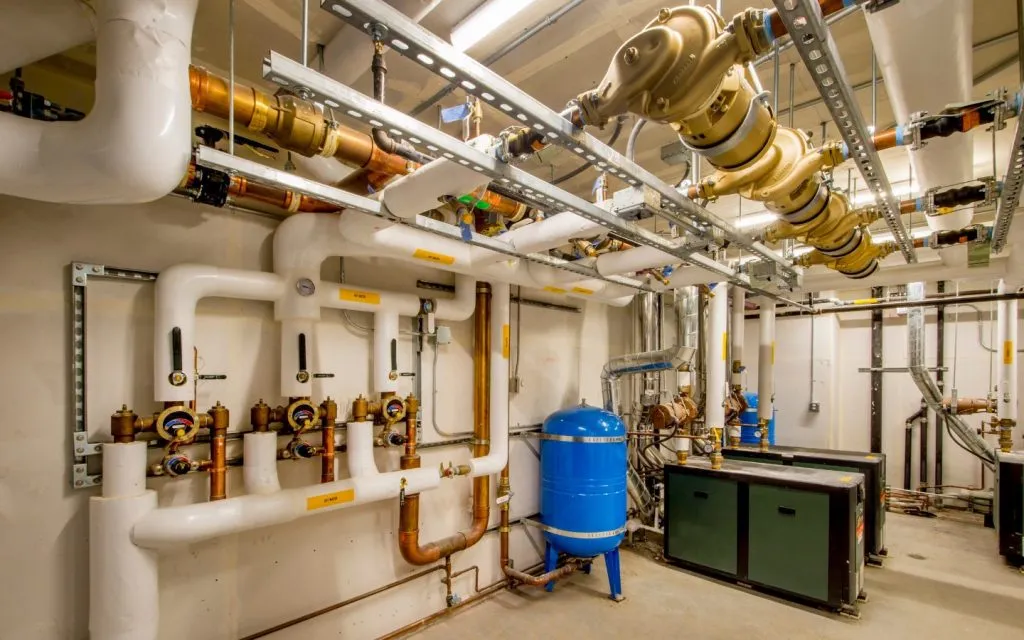
For a typical London plant room, the schedule should cover:
- Each boiler or boiler module, with its output and whether the burner is separate.
- Flues and ventilation, including long or shared flue runs.
- Pressurisation unit and expansion vessels on sealed systems.
- Pumps, controls and any building management system connection that tells the boilers when to run.
- Hot water plant, such as calorifiers or cylinders heated by the boilers.
- Gas safety devices, such as isolation valves, gas detection and any ventilation interlock.
- Other gas appliances on site, for example a commercial kitchen or gas heaters in a warehouse, if you want them included.
Walk the site with the contractor before signing and check the list against what is actually there. Our commercial boiler servicing page explains what a service visit covers on this kind of plant.
Planned Visits: How Many, and What Each One Includes
The contract should give the number of visits a year, the months they fall in and a task list for each visit. At least one full service a year, following each manufacturer's instructions, is the minimum.
Plant that runs all year, such as boilers that also make hot water for a hotel, gym or care setting, often needs a second visit part-way through the year. Many sites book the main service before the heating season, so problems show up in late summer rather than on the first cold morning.
Ask for the task list itself, not a summary. A useful one says what is cleaned, what is tested, what readings are taken and which consumables are replaced. Many contractors base their task lists on SFG20, the industry's standard maintenance specification library. Your contract does not have to use it, but it gives you something objective to compare quotes against.
Gas Safety Inspections and Other Statutory Checks
A service and a gas safety inspection are different jobs, so the contract should say whether both are included and which record you receive for each. Do not assume a service visit produces a gas safety record.
For boiler plant and other non-domestic appliances, the inspection is recorded on a commercial gas safety record, and a commercial kitchen has its own catering record. Our commercial gas safety certificate page sets out what those inspections cover. In a building with let flats, the landlord gas safety rules also apply to any communal boiler that heats them, so the contract should state who produces that annual record and when.
Some checks sit outside a gas engineer's work, and the contract should say who arranges them:
- Pressure systems. Steam boilers and some larger pressure vessels fall under the Pressure Systems Safety Regulations 2000 and need examination under a written scheme by a competent person, often arranged through an insurer's engineering inspector.
- Water hygiene. Where the boilers heat stored hot water, legionella control, including temperature monitoring, is often handled by a separate water hygiene contractor.
Breakdowns, Parts and Remedial Work
The contract should say how you report a fault, what response it commits to, and how labour and parts for repairs are charged. This is where contracts that look similar on price turn out to be very different.
Questions worth getting answered in writing:
- Response terms. What does the contractor commit to for a total loss of heating or hot water, and how does that differ from a minor fault? Ask whether it applies out of hours and at weekends.
- Labour. Is labour for fault visits included, capped or charged at an agreed rate?
- Parts. Are parts included, discounted or charged in full? Are some items, such as heat exchangers or burners, excluded?
- Remedial work. Will anything found at a service be quoted before it is done, with a limit above which your approval is needed?
- Unsafe findings. If an appliance is classed as unsafe, what happens next, and who tells the occupants?
The price of a contract depends on the plant, the number of visits and how much reactive cover you buy. We have written a separate guide to what sets the price of a commercial boiler service if you are comparing quotes.
Records, Term and Getting Out
You should receive a written report after every visit and be able to get copies of all records at any time, including when the contract ends. The term, notice period and any automatic renewal should be stated plainly.
A good report gives the date, the engineer's name and Gas Safe number, the plant checked, the readings taken and a list of defects with what was done about each one.
Before signing, check:
- The engineers. Everyone working on the plant must be Gas Safe registered, with the non-domestic categories on their card that match your appliances.
- Subcontracting. Will the contractor send its own engineers, or pass visits to another firm?
- Term and notice. How long the contract runs, how much notice is needed to end it, and whether it renews automatically.
- Price review. How the price changes at renewal.
In a block of flats, one extra point applies. A maintenance agreement lasting more than 12 months, where any leaseholder would pay more than £100 a year towards it through the service charge, triggers formal consultation under section 20 of the Landlord and Tenant Act 1985. Managing agents should build that into the timetable.
When a Maintenance Contract Is the Wrong Answer
A contract makes sense when there is plant to maintain and someone to manage it. It is the wrong answer in a few common situations.
- A single domestic-sized boiler. A small office or shop with one wall-hung boiler usually needs an annual service and safety check, not a commercial PPM contract. For a boiler in a home, compare domestic boiler service plans instead.
- Plant that is failing now. A contract does not fix a boiler that is already locking out or leaking. Book a fault visit first and sign a contract once the plant is working.
- Plant due for replacement. If the boilers are near the end of their life, a long contract can tie you in. Ask for a shorter term, or planned visits only, until you have decided.
If you want a contract priced, send us the site address, a list of the plant with photos of the data plates, the date of the last service and the last gas safety record, and when access is possible. We will come back with a written schedule of what we would do on each visit, so you can compare it line by line.
Frequently asked questions
Is a boiler maintenance contract a legal requirement for a business?
No. The law requires whoever controls a workplace to keep its gas appliances, pipework and flues in a safe condition, but it does not require a contract. Most sites use one because regular servicing and inspection, with a written record each time, is the practical way to show that duty has been met.
What is the difference between PPM and reactive maintenance?
Planned preventive maintenance (PPM) is scheduled servicing and inspection on fixed dates, aimed at stopping faults before they happen. Reactive maintenance is a call-out after something has gone wrong. Many commercial heating contracts combine the two, so check how each part is charged.
Does a maintenance contract include the gas safety certificate?
Only if it says so. A service and a gas safety inspection are separate jobs with separate records. Check that the contract names the annual inspection, lists every appliance it covers and says which record you receive, especially if the building includes let flats or a commercial kitchen.